Levels of Understanding in Babies Under 1 Year
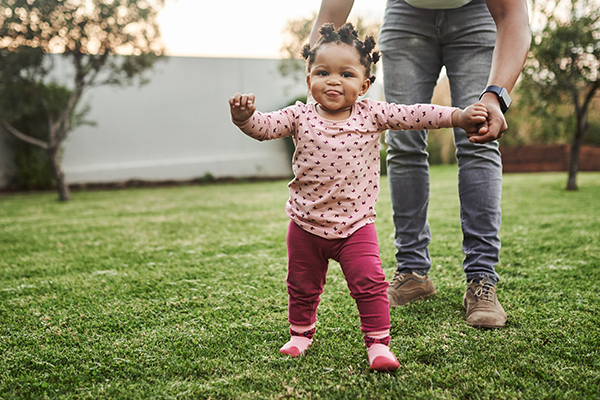
Later a baby's first birthday, the rate of growth begins to slow downward. Your baby is now a toddler and is very active. If your toddler isn't walking yet, he or she volition soon. Walking offers chances for exploring areas that were previously out of reach, and for practicing independence.
Doctors use milestones to tell if a toddler is developing as expected. At that place's a wide range of what's considered normal, so some children may gain skills earlier or afterwards than others. Toddlers who were built-in prematurely may accomplish milestones after. Always talk with your dr. about your child's progress.
What can a 1 Year Old Babe practice at this age?
As your baby continues to abound, y'all volition notice new and exciting abilities that develop. While babies may progress at different rates, the following are some of the common milestones your babe may reach in this age group:
- Walks alone past 15 months, then begins to run
- Can stop, squat then stand again
- Sits down on small stool or chair
- Climbs stairs while holding on
- Dances with music
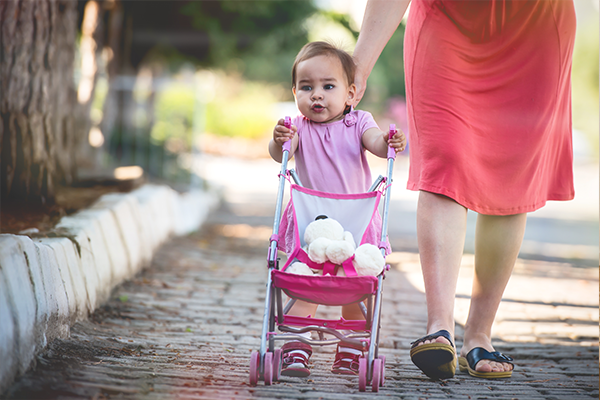
- Plays with push button and pull toys
- Tin build towers out of blocks
- Throws a ball overhand
- Puts two- to three-piece puzzles together
- Scribbles with crayon or pencil and may imitate drawing a straight line or circumvolve
- Generally feeds self with fingers
- Begins to feed cocky with spoon
- Drinks well from cup
- Can assistance with dressing and may be able to undress unproblematic clothes (i.east., clothes without buttons or zippers)
- Start molar (back) teeth appear
- Takes one afternoon nap
- May sleep ten to 12 hours at dark
What Can a 1 Twelvemonth Old Baby Say?
Oral communication evolution is very heady for parents as they lookout man their babies become social beings that tin can interact with others. While every infant develops voice communication at his or her ain rate, the following are some of the mutual milestones in this age group:
- Imitates brute sounds and noises
- At one yr, says four to six simple words
- At eighteen months, says x to fifteen words
- By 18 to 24 months, uses unproblematic phrases or two-word sentences (i.e., "Mommy up")
- By 2 years, says 100 or more than words
- Asks "What is … ?"
- Uses negative phrases such as "No want"
What Does a 1 Year Old Infant Empathize?
Past about 18 months of age, children begin to empathize symbols – the relationship of objects and their meanings. While children may progress at dissimilar rates, the post-obit are some of the mutual milestones children may reach in this historic period grouping:
- Waves bye-bye and plays pat-a-cake
- By 18 months understands i-step questions and commands such equally "Where is the ball?"
- By 24 months understands two-step questions and commands such every bit "Go to your room and get your shoes."
- Understands object permanence (a hidden object is still there)
- Understands the cause-and-outcome human relationship better
- Likes to explore drawers and boxes to see what is inside
- Make-believe play increases (i.due east., may imitate housework or feed a doll)
- Recognizes own face in mirror
- Can point to body parts (i.due east., nose, pilus, eyes) when asked
- Begins to empathise use of sure objects (i.eastward., the broom is for sweeping the flooring)
- May ask for parent'due south help by pointing
What Can a 1 Year Old Baby See?
As your baby's eyesight develops, they begin to be able to focus on and interact with people and objects. Their motor skills and manus eye coordination continue to get stronger and they are able to kickoff seeing toys across the room and exploring their functions. For case, they can focus on a ball and brainstorm to kick or throw it.
While babies are still developing, many things intrigue them. A one year old may become curious most sure toys and objects that have moving parts and tin be infatuated with how it works. At this stage, they will enjoy looking at bright colors and pictures in books, especially familiar images. Encourage your baby to explore new places and objects, while pointing out items by name.
1 Year Old Babe Sensory Development: Touch
Your baby will begin to wander around by either crawling or walking to explore their new freedom. While it's of import for them to experience unlike textures and surfaces in your home, make sure in that location are no dangerous items that tin hurt them. Be aware of small objects that they could choke on, as they are in a phase of putting items in their mouth.
Once these safety precautions are done, let your i year former to roam around and experience different objects. You can let your infant feel the fuzziness of a coating or a rough concrete surface. Allow them to squish dissimilar foods in their hand like blueberries, and discover what items feel the aforementioned or have dissimilar textures.
What Can My i Year Old Baby Taste And Smell?
At 1 years old, your baby is trying different foods and is developing food preferences. The best way to keep their food palette growing is to continue giving them new nutrient items with different tastes and smells. They might not eat it or like it at get-go, only proceed trying. It can accept multiple tries before a babe likes a new nutrient.
Encourage your infant to explore outside and experience different scents, like sugariness flowers and pelting.
How Does a 1 Year Former Baby Interact With Others?
As children begin to walk, they may show independence and endeavour to walk farther away from the parent. Separation anxiety and fear of strangers may lessen, then return at about 18 months. While every kid is unique and will develop unlike personalities, the following are some of the common behavioral traits that may be present in your child:
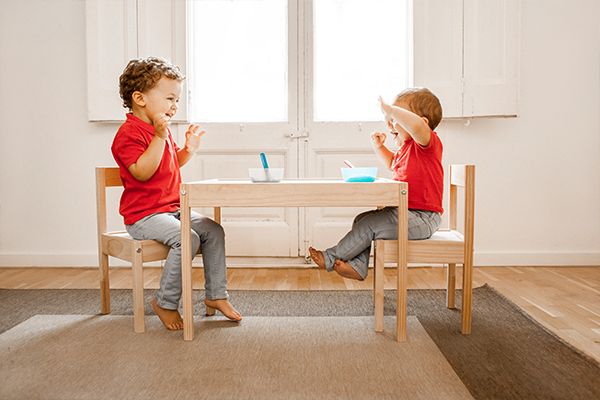
- Plays alongside others without interacting, called parallel play
- May begin clinging to parents around eighteen months
- May begin to say "no" more than frequently to commands or needs
- May take atmosphere tantrums
- May utilise a blanket or stuffed beast equally a security object in identify of the parent
i Year Old Baby Physical Growth
Your doctor has measured your babe's weight, length and head size (circumference) since nascency and put them on a growth chart. This is where to look first if you have questions about your baby's growth.
When you wait at the growth chart with the physician, compare your babe's growth with their own growth blueprint, not with the growth of other babies. As long as your baby'due south growth is steady, there's usually no reason to worry.
If you're concerned about your baby's weight or growth, talk with your doctor, who might ask:
- Has your baby been ill? A couple days of not feeling well, specially if combined with vomiting or diarrhea, can atomic number 82 to weight loss. The weight volition come back when your little one feels better.
- Is your baby on the move? Crawling, cruising and walking burn calories, so weight gain might be less with this mobility.
- Is your baby more than interested in playing peek-a-boo or dropping the spoon on the floor than eating? The world is a fascinating identify, and your well-nigh-toddler is learning more than every twenty-four hour period. Endeavour not to distract your infant during mealtime. Also watch for signs that your little one has eaten plenty.
- Are you introducing the right kinds of foods? As your babe gets better at eating, pay more attending to the texture and types of foods you serve. Your kid might have lost involvement in puréed baby foods. Instead, serve soft tabular array foods and finger foods that are safe and fun.
What Nearly a Infant Who Gains Weight Fast?
Parents may wonder: Tin babies proceeds besides much weight? But just a few babies and toddlers are overweight. In those cases, advice from the baby'southward doctor can help.
Never skip feedings. Only practice lookout man for signs from your baby that they are full. Make certain your baby's calories come from nutritious sources, like fruits, vegetables and fortified cereals after historic period 1.
Get down on the carpet with your babe and encourage concrete activity, making sure that your fiddling i has a safe space to move around in. Limit time spent in motorcar seats, strollers and playpens.
One of the all-time things yous can do for your baby is to eat well and exist physically agile yourself. Your babe has a better hazard of growing upward fit if good health habits are role of the family's manner of life.
How Long Should My Baby Sleep?
Toddlers are more and more aware of their surroundings, so distractions can disrupt them at bedtime. A simple and consistent bedtime routine is a parent's best bet for getting a sleepy toddler into bed. Between the ages of i and 2, about kids need about 11 –14 hours of slumber a day, including ane or ii daytime naps.
At around 18 months, or sometimes sooner, most toddlers condense their 2 naps into i afternoon nap. A toddler who fights the forenoon nap is probably gear up for just an afternoon nap.
Check out our Healthy Slumber for Children guide for more info.
How Tin can I Help Increase My 1-Year-One-time Baby's Learning And Emotional Security?
Consider the following as ways to foster the emotional security of your ane-year-old:
- Give your kid toys that tin can be filled and emptied and toys for imaginary play.
- Give your kid unproblematic ii- to six-piece puzzles and balls of all sizes.
- Help your child build towers of blocks.
- Encourage your kid to "aid" you with household tasks.
- Give your kid newspaper and large crayons to scribble and draw.
- Talk to your child with clear elementary linguistic communication most what you are doing.
- Use the right names for objects, even if your child does not. For instance: your child might say "wa-wa," and you say "H2o, that is correct."
- Expand your child'south sentences. If your kid says, "Desire cookie," yous say, "Do y'all want another cookie?"
- Read to your child every day using flick and story books.
- Feed your kid at family mealtimes.
- Provide consistent house, advisable discipline without yelling or hitting.
Reviewed by Dr. Vivi Tran , Los Alamitos Pediatrics, CHOC Primary Intendance – May 2021
hardwickprehopecon.blogspot.com
Source: https://www.choc.org/primary-care/ages-stages/1-year/
0 Response to "Levels of Understanding in Babies Under 1 Year"
Postar um comentário